I haven't had the greatest luck in terms of timing for most of my visits in North America. This has been mostly due to vintage, but in some cases due to the big Wine Spectator tasting in NYC. The bad luck I experienced in the Niagara Peninsula on this particular Saturday was due to a promotion they have running every weekend in November, which is essentially a passport weekend. You buy a ticket and enjoy a bit of food and wine at as many wineries you can visit in one weekend. There were considerably more people in the region than normal, so I was contending with crowds. This was especially apparent in Niagara-on-the-Lake, closer to Niagara Falls with larger wineries closer together. Niagara-on-the-Lake is also very flat, which in my opinion doesn't make for great wines, but is easier to drive around I guess. Below is a photo I took above the Niagara Whirlpool.
Whilst Chateau des Charmes is one of the larger wineries on the Peninsula, it is still family owned and has been for over 30 years. The winery was established by a French Algerian who pioneered grafting European vinifera vines onto native North American rootstocks to help them survive the harsh winters, which can drop down to -30 degrees. The viticultural aspects of Chateau des Charmes are exceptional, using various trellising techniques and sustainable practices. The visitor centre is in the chateau on the estate, and is one of the best I've seen. They have various areas for retail and tasting, on two levels. They also offer tours on the half hour in summer, which starts in the vineyard and goes down into the cellars. The winery is best known for it's ice wines, which were exceptional but should be at $75 for 200ml. They produce the only savagnin ice wine in the region (possibly the world), which was very grassy for a dessert wine, but had a very concentrated citrus based mid-palate.
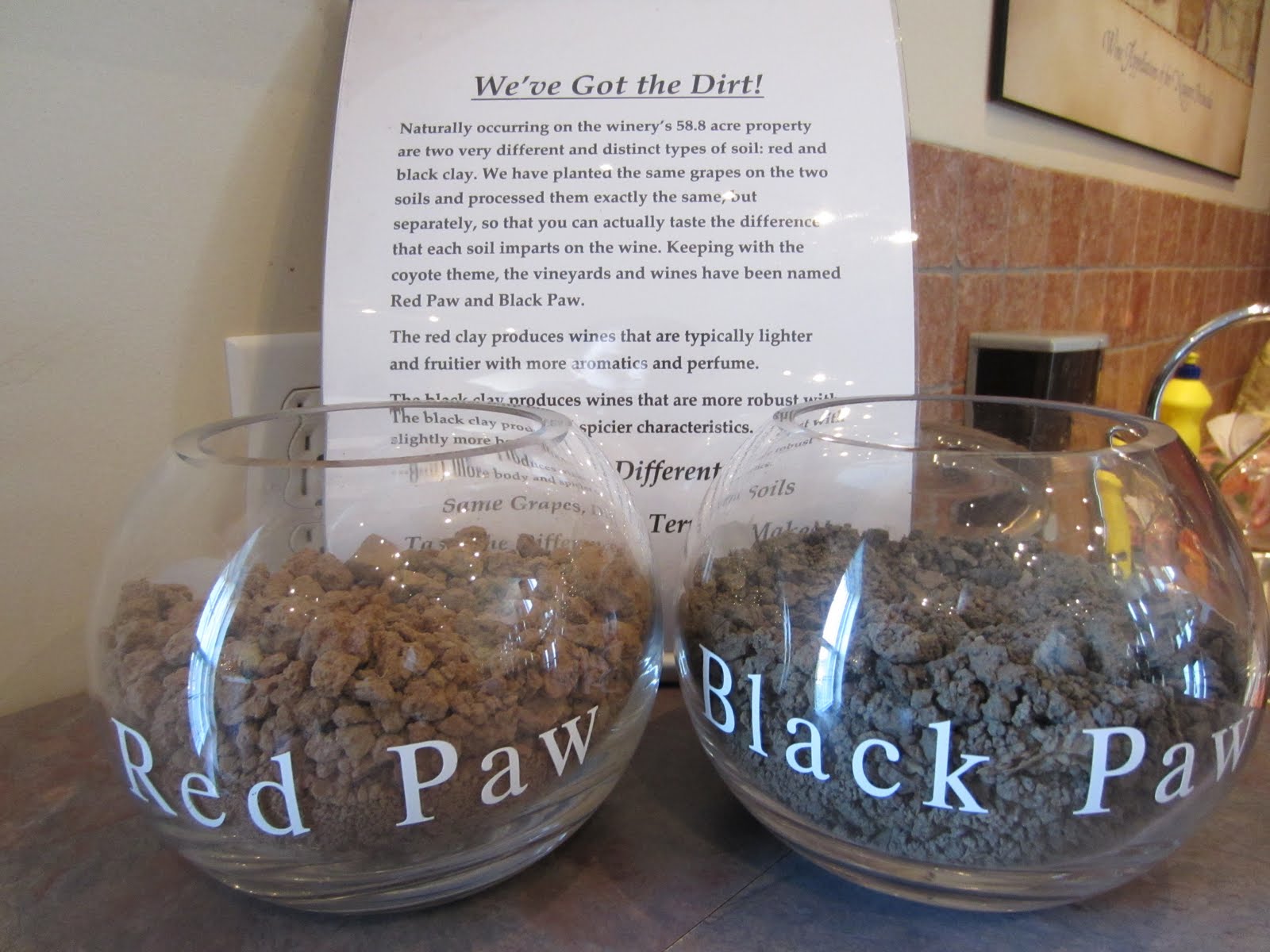
One of the more interesting estates I have visited was Coyote's Run, which has two distinct soil types for each vineyard. The Red Paw vineyard has what they call red Trafalgar clay loam, and the Black Paw vineyard has a dark Toledo clay loam. They promote the nature of terroir using numerous wines made from these two vineyards, and there is a significant difference between them. The issue I had with the wines was that they were either very light and devoid of character, or they were poorly made. These wines seemed to be suffering from their climate, as they lacked ripeness of fruit and tannin.
Stratus Vineyards, established in 2000, is making a name for itself as a sustainable and innovative winery that makes blending a focus. The facility itself is quite breathtakingly modern, and is a gravity-flow based energy-efficient winery. Amazingly the vines still had fruit on them, despite the shoots caning over and losing all of their leaves. A French winemaker uses up to 18 red and white varieties to blend the flagship wines, and depending on the vintage makes single varietal wines. It was fantastic to do a vertical tasting of the Stratus White and Red wines from the 2006, 2007 and 2008 vintages. The 2006 and 2008 vintages were very similar, so tasting the 2006 was like seeing where the 2008 will be in a few years. The 2008s were showing their youth, and not expressing a lot of fruit, but had great balance. The 2007 vintage was warmer, so the fruit for both wines was quite full and rich, and will develop faster in the bottle. In terms of the Stratus White, the 2006 was showing the best, picking up an oiliness and roundness from bottle age. The 2007 Stratus Red was the best now, as the 2006 was closed in the bottle and the 2008 was far too young. A similar approach is taken to the Ice Wines, as they release a white and red blend.
Another Frenchman makes the wines at 13th Street Winery, now located on 4th Avenue. A wide range of wines are made using fruit from numerous vineyards from within the Niagara Peninsula. The rieslings had a great richness and acidity balance, with an unmistakable crude oil and kerosene character. The rose made from cabernet franc, quite dark in colour, had a fascinating beetroot nuttiness with a wash-rind cheese note on the nose. The pinot was quite good for the region, but was showing very young. The cabernet franc table wine was very good, with structure and tannins, and great aromatics. I heartily suggest giving 13th Street a visit if you are in the area, as they also have a fantastic bakery and market.
Not unlike Fielding Estates, the Flat Rock Cellars Tasting Room is located on a ridge above their vineyards, and has a fantastic view. A Kiwi makes the wines here, but I didn't hold it against them. As you can imagine, they make a sauvignon blanc, which I found to be unmistakably made by a Kiwi, with obvious differences to an actual Kiwi SB. Another noticeable Kiwi influence can be found in the packaging of the wines, as they are all sealed under screwcap. He also has a serious pedigree at Felton Road in Central Otago, so understandably pinot noir is a focus at Flat Rock. The 2009 Estate Pinot Noir has lovely soft and mellow tannins, not unlike a Marlborough PN, and a good introduction to the variety. The 2009 Gravity Pinot Noir on the other hand has immense balance of fruit and savoury elements, great length and a gamey undercurrent.
Click here to see more photos from Day 2 of the Niagara Peninsula
Showing posts with label Niagara Escarpment. Show all posts
15 Nov 2011
Ice Ice Baby... sorry (Niagara Peninsula, Ontario - Day 2)
14 Nov 2011
Top Shelf (Niagara Peninsula, Ontario - Day 1)
The Niagara Peninsula in Ontario has a lot going for it. Sure, it is one of the most marginal and challenging climates for growing wine grapes, but it was so many other assets at it's disposal. For one, as a cool-climate region it is poised to capitalise on the increased interest in cool-climate food-friendly wines both domestically and overseas. They have also garnered serious attention for their ice wines, trumping some famous European regions in a number of competitions. The Niagara Peninsula is also conveniently located only an hour or so from Toronto (their biggest market), right next to one of the biggest tourist attractions in North America (Niagara Falls), and less than a days drive to over 50% of the US population. Their agritourism is some of the most sophisticated I have seen outside of California, and they are doing pretty well. If only they could have more consistent vintages...
No different to many regions in North America, the Niagara Peninsula has a lot of new wineries. The oldest existing wineries go back to the '70s, but most have been established in the last 15 years. One of these is Malivoire Wines, founded in 1995 by Martin Malivoire, a former Hollywood special effects expert. Looking for stability and a chance to be close to home he and wife Moira established the winery on a former orchard, building a gravity-fed winery into the side of a hill. The winery and most vineyards are located in the Beamsville Bench sub-region of the Niagara Escarpment, benefiting from aspect, elevation and protection from wind. The initial focus was on Burgundian varieties of chardonnay, pinot noir and gamay, but they have since expanded to included fuller reds and rieslings, identifying market trends and regional performers. They are best known for their Ladybug Rose, the 2010 being bone-dry with a nice savoury strawberry character, good balance without being too simple. It was interesting to hear how the Niagara Escarpment was formed, and also to see the influence on the winery that a special effects expert had. The cellar in particular felt like a futuristic army barracks.
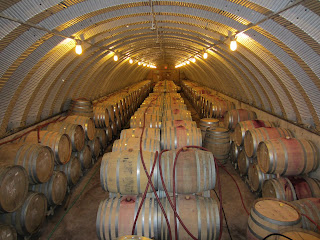
With the weather deteriorating I headed further along the Escarpment to Hidden Bench Vineyards and Winery. The mission here is pretty simple; to make world-class wines. Having tasted through most of the wines I would have to say they are doing a pretty good job of this. Their wines express unique terroir and varietal harmony, and whilst not in everyone's price bracket should be held up to show the immense potential of the region. The tasting room was lovely and warm (nice and quiet, too), so it was great to taste and ask questions of the very knowledgeable Jennifer. There are two ranges in the portfolio, the Estate Series and Terroir Series, which are understandably in much smaller volumes. Here were the standout wines for me;
Hidden Bench Tete de Cuvee Chardonnay 2008 - very bold bright peach and lime fruit, with a complex floral and pear nose. The palate is very rich and layered, yet quite light and clean. Citrus complexity and balance would be even better with food.
Hidden Bench Locust Lane Pinot Noir 2008 - dark cherry and game notes combine to create a very savoury fruit nose. Subtle yet opulent and rich, silky and soft. Hits an amazing sweet spot between fruit and savoury elements rarely achieved in new world pinot noir, but very youthful.
After some hearty pea and ham soup generously provided by my hosts at Hidden Bench, I headed off gleefully in actual snowfall. Further up the hill is Fielding Estate, which boasts a fantastic view out of the tasting room over the vineyards. The modest production covers a range of varieties, and includes a sparkling riesling. Working with so many varieties offers the opportunity to blend, and several white and red blends are produced. The range in general offer great value to consumers who may be new to wine, as they are very clean and precise wines, reflective of varietal character. They do lack interest, which in general you have to pay a bit more for.
Tawse Winery boasts old world inspiration and new world perfection, which is quite an absolute statement to make. It's not without merit though, as the wines are on the non-traditional side of new world, going for texture and mouthfeel rather than obvious varietal character. The white wines were the most impressive for me, including a range of single vineyard chardonnays and rieslings. Riesling in particular seems to do very well in this area, particularly the Tawse Estate Riesling 2010, exhibiting delicious ripe grapefruit characters. The red wines were perhaps products of their vintage, as they were unripe and a bit sour. The ice wines were both outstanding; an oaked chardonnay having great volume and a caramel edge, and a riesling which was reminiscent of quince paste. I discovered as I was writing this post that a tawse is actually a corporal punishment implement used in Scottish schools. I'm not sure if there is a connection.
That evening I just happened to be walking down by the famous Falls, and fireworks just happened to be going off. Here are a few photos, which whilst not great in quality show how amazing this sight was.
Click here to see more photos from Day 1 of the Niagara Peninsula
No different to many regions in North America, the Niagara Peninsula has a lot of new wineries. The oldest existing wineries go back to the '70s, but most have been established in the last 15 years. One of these is Malivoire Wines, founded in 1995 by Martin Malivoire, a former Hollywood special effects expert. Looking for stability and a chance to be close to home he and wife Moira established the winery on a former orchard, building a gravity-fed winery into the side of a hill. The winery and most vineyards are located in the Beamsville Bench sub-region of the Niagara Escarpment, benefiting from aspect, elevation and protection from wind. The initial focus was on Burgundian varieties of chardonnay, pinot noir and gamay, but they have since expanded to included fuller reds and rieslings, identifying market trends and regional performers. They are best known for their Ladybug Rose, the 2010 being bone-dry with a nice savoury strawberry character, good balance without being too simple. It was interesting to hear how the Niagara Escarpment was formed, and also to see the influence on the winery that a special effects expert had. The cellar in particular felt like a futuristic army barracks.
With the weather deteriorating I headed further along the Escarpment to Hidden Bench Vineyards and Winery. The mission here is pretty simple; to make world-class wines. Having tasted through most of the wines I would have to say they are doing a pretty good job of this. Their wines express unique terroir and varietal harmony, and whilst not in everyone's price bracket should be held up to show the immense potential of the region. The tasting room was lovely and warm (nice and quiet, too), so it was great to taste and ask questions of the very knowledgeable Jennifer. There are two ranges in the portfolio, the Estate Series and Terroir Series, which are understandably in much smaller volumes. Here were the standout wines for me;
Hidden Bench Tete de Cuvee Chardonnay 2008 - very bold bright peach and lime fruit, with a complex floral and pear nose. The palate is very rich and layered, yet quite light and clean. Citrus complexity and balance would be even better with food.
Hidden Bench Locust Lane Pinot Noir 2008 - dark cherry and game notes combine to create a very savoury fruit nose. Subtle yet opulent and rich, silky and soft. Hits an amazing sweet spot between fruit and savoury elements rarely achieved in new world pinot noir, but very youthful.
After some hearty pea and ham soup generously provided by my hosts at Hidden Bench, I headed off gleefully in actual snowfall. Further up the hill is Fielding Estate, which boasts a fantastic view out of the tasting room over the vineyards. The modest production covers a range of varieties, and includes a sparkling riesling. Working with so many varieties offers the opportunity to blend, and several white and red blends are produced. The range in general offer great value to consumers who may be new to wine, as they are very clean and precise wines, reflective of varietal character. They do lack interest, which in general you have to pay a bit more for.
Tawse Winery boasts old world inspiration and new world perfection, which is quite an absolute statement to make. It's not without merit though, as the wines are on the non-traditional side of new world, going for texture and mouthfeel rather than obvious varietal character. The white wines were the most impressive for me, including a range of single vineyard chardonnays and rieslings. Riesling in particular seems to do very well in this area, particularly the Tawse Estate Riesling 2010, exhibiting delicious ripe grapefruit characters. The red wines were perhaps products of their vintage, as they were unripe and a bit sour. The ice wines were both outstanding; an oaked chardonnay having great volume and a caramel edge, and a riesling which was reminiscent of quince paste. I discovered as I was writing this post that a tawse is actually a corporal punishment implement used in Scottish schools. I'm not sure if there is a connection.
That evening I just happened to be walking down by the famous Falls, and fireworks just happened to be going off. Here are a few photos, which whilst not great in quality show how amazing this sight was.
Click here to see more photos from Day 1 of the Niagara Peninsula
Subscribe to:
Posts (Atom)