 |
| Picking grapes in the Rheinhessen |
Showing posts with label Mosel. Show all posts
Showing posts with label Mosel. Show all posts
22 Nov 2012
The Vintage Experience


21 Nov 2012
Vintage 2012 - Weeks 8 & 9
My final two weeks of vintage were for the most part uneventful as the harvest concluded and the vast majority of work was cleaning and checking the fermenting tanks. I was very generously taken out for dinner and lunch by the domestic sales manager and the owner respectively, and on both instances got to eat some lovely German food. There were a couple of dinners to celebrate the end of vintage; first with the Romanian vineyard workers and then the cellar team who are all locals. The winery also welcomed a journalist and they opened some bottles going back to 1983, all of which I had the chance to taste as well.
 |
| Bernd working hard pressing botrytised fruit to get juice with high sugar content. |
 |
| Niklas compacting grape marc for future distillation to make schnapps. |
 |
| Range of wines tasted going back to 1983. |
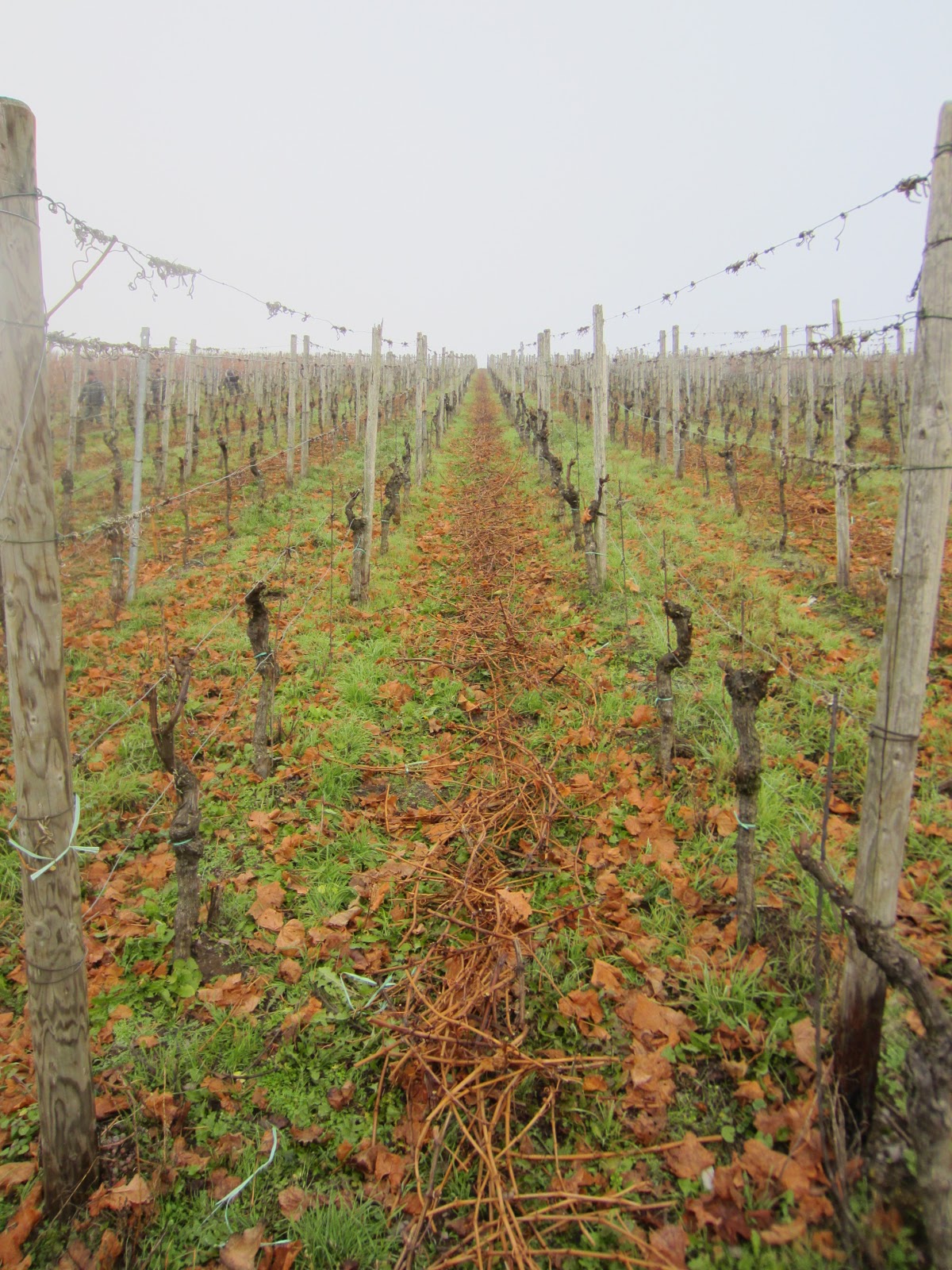 |
| Freshly and heavily hand-pruned vines in the Scharzofberg vineyard. |
 |
| Old shoots clinging to the trellis wire. Always reminds me of snakes. |
 |
| Just so you know who owns this vineyard. |
 |
| This is Alexandra, one of the Romanian friends I made in the vineyards. |
 |
| Walking up those steep slopes pruning requires a rest break. |
4 Nov 2012
Vintage 2012 - Week Seven
Week two at Kesselstatt was mostly the same as the first. The fruit coming in is of a very high quality, but unfortunately it is in quite small quantities. With the very cool and wet weather we have been having the ripeness is not as high as Wolfgang would like, but they are very healthy bunches with little rot. It is nice to get into a routine of checking the ferments followed by transferring filtered juice into fermentation tanks each day, but it can also be a little dull doing the same thing every day. Such is the beauty and the curse of working exclusively with white wine, as they require much less work than reds. Some of the days have been a bit shorter with much less work to do in the winery as a by-product of lower volumes but healthy fruit. Thursday was a holiday in Germany and Wolfgang was nice enough to take the team to a local restaurant for some hearty schnitzels.
 |
| Gorgeously ripe berries in the vineyards opposite Schloss Marienlay, covered in morning condensation. |
 |
| Schloss Marienlay, the headquarters of Reichsgraf von Kesselstatt. |
 |
| The Piesporter vineyards in the heart of the Mosel Valley. |
 |
| The famous blue slate soils of the Mosel. |
Vintage 2012 - Week Six
Here I am in the Mosel region, based in the Ruwer Valley just outside of Waldrach. I've now been working at Kesselstatt for about ten days and it has been great so far. Almost all of the fruit has now been picked from their numerous vineyards, and every day I get to check the progress of the tanks fermenting. The winemaker Wolfgang Mertes (who has also generously provided me with a great room whilst I am here) prefers spontaneous fermentations, some of which take a week to start. Before they start fermenting the rieslings can have a character of sweet tea to them, which is quite unique and delicious. Some of the weisburgunder tanks are fermenting really slowly but show great character because of it. It has been getting colder, sometimes raining and even a bit of snow. I picked grapes my first day and also had the chance to visit some of the other vineyards.
 |
| Vineyards overlooking Trier, the town where the Ruwer and Saar valleys join the Mosel valley. |
 |
| Where I am staying in the Mosel. |
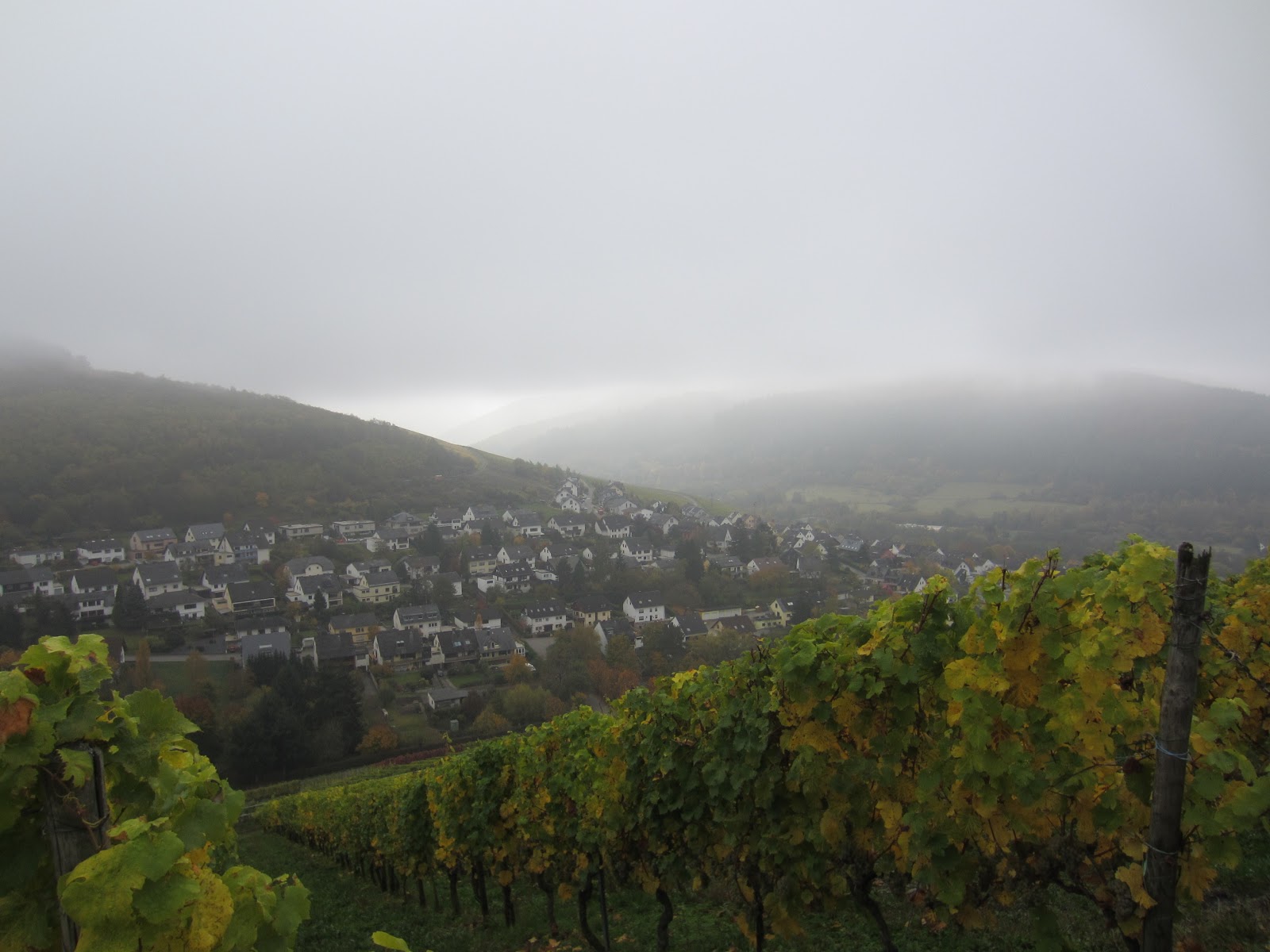 |
| The vineyards above Kasel the first day of work, beautiful day and actually got a bit warm in the afternoon. |
 |
| The Saar vineyard of Scharzofberg. |
 |
| Bins of fruit freshly delivered to the winery. |
 |
| The bins are lifted off the ground or off the back of trucks. |
 |
| They are then emptied into the destemmer and the berries are pumped up to the hoppers. |
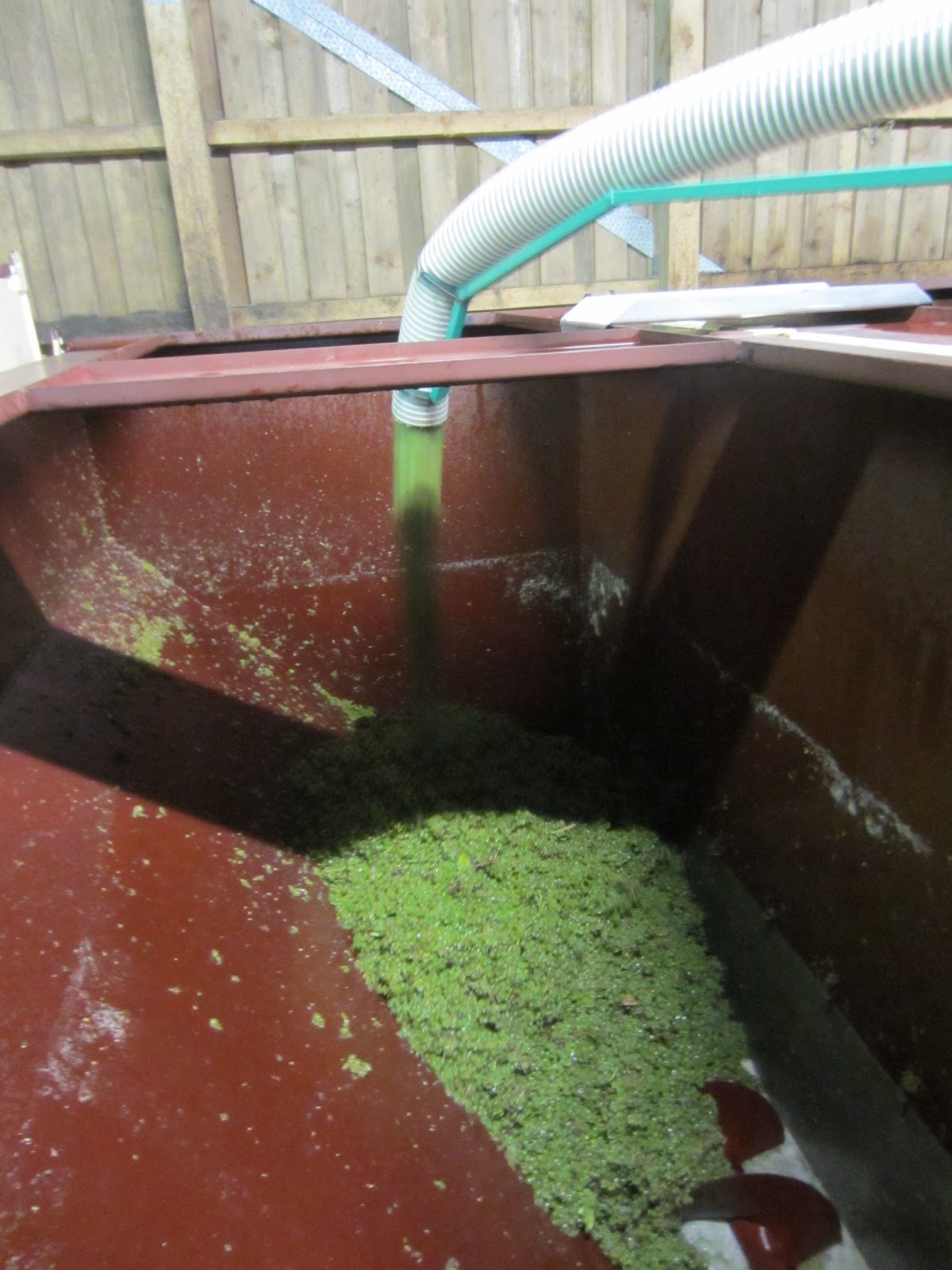 |
| Berries are free run juice go into the hoppers. |
 |
| The hoppers are then emptied into one of the presses below. |
 |
| The pressed juice gets transferred to tanks for settling overnight and racking off sediment the following morning. |
 |
| Flotation filtering is used to separate additional solids in the juice before it goes into fermentation tanks. Here we can check to see when the clear juice becomes sediment. |
 |
| Tanks must be cleaned thoroughly. This is Simon. |
1 Nov 2012
Vintage 2012 - Transition
Many apologies for the delay in posting, but as the title suggests I have moved from the Rheinhessen to the Mosel, where I am completing my vintage experience at Reichsgraf von Kesselstatt. Kesselstatt is one of the most important producers in the Mosel, owning 50 hectares of vineyards in the Mosel, Saar and Ruwer valleys. Unfortunately I have had limited access to the internet, and thus it has been very difficult to post on the blog. Here are the remaining photos from my time at Gunderloch, and future posts will be catching up from the first week or two at Kesselstatt.
 |
| Quite a beautiful sight in the vineyards. |
 |
| Spectacular view of the varying levels of leaf colour change. |
 |
| Paul Dietz from Sydney, who took over from me at Gunderloch, taking a sample from the tank the hard way. |
 |
| The baby about to start fermenting. |
 |
| Paul and I sharing a beer at Oktoberfest in Mainz. I have since lost the beard. |
3 Feb 2012
An Education (Mosel Valley, Germany - Day Four)
Tasting the wines from the Mosel, I started to come up with a theory as to why they are so unappreciated in so many markets. Consumers are led to believe that wine must be strong and possibly heavy, and if it a wine is easy to drink then it is simple and cheap. The nature of wines from the Mosel having residual sugar to offset the acids makes them very fresh, approachable and easy to drink. Therefore in their minds they almost feel guilty that they are so easy to drink. It also comes back to the idea that wine is an alcoholic beverage consumed to become intoxicated, rather than how it should be consumed, with food. Being so approachable and low in alcohol makes these wines so adaptable to food it begs the question; what does it take to get people to drink these wines more, and value them properly?


The definition of austerity (Mosel Valley, Germany - Day Three)
 |
| Castle Landshut above Bernkastel |
2 Feb 2012
Back to the future (Mosel Valley, Germany - Day Two)
For the first time on my trip, I feel totally out of my depth in the Mosel Valley. Having started my wine career in the Yarra Valley, and working for a sparkling producer, means that I am very familiar with the varieties of Burgundy, Bordeaux and the Rhone Valley. When it comes to Riesling, I am a little bit out of my element. I have gained some familiarity with the wines of such regions as the Clare Valley and Eden Valley, and also other emerging regions in Australia and New Zealand. Visiting Alsace in 2010 helped a lot, but of course Riesling isn’t necessarily the focus. German Rieslings, particularly the wines of the Mosel, are in an entirely different league. This is of course why I have come to the region; to gain familiarity and experience.
 |
| On top of the world, looking down on creation! |
1 Feb 2012
Take me to the river (Mosel Valley, Germany - Day One)
Whilst I admit that it was wonderful starting the European leg of my trip in the familiarity of Champagne, there was something quite exhilarating about arriving into a totally new region. I spent the past week staying with a friend in the German town of Neuss trying to organise my visa and a car, and then caught up with some friends I met in the States in Cologne over the weekend. On Sunday afternoon I drove down in very cold conditions towards my base for the next five nights, the town of Traben-Trarbach, situated in the middle of the Mosel-Saar-Ruwer. The town straddles the Mosel River; Traben on the North side and Trarbach on the South. Just as I was entering the valley above the Mosel River, it began to snow very lightly, which made it that much more beautiful. It was already dusk so it was a little too dark, but amazing nonetheless.


Subscribe to:
Posts (Atom)